
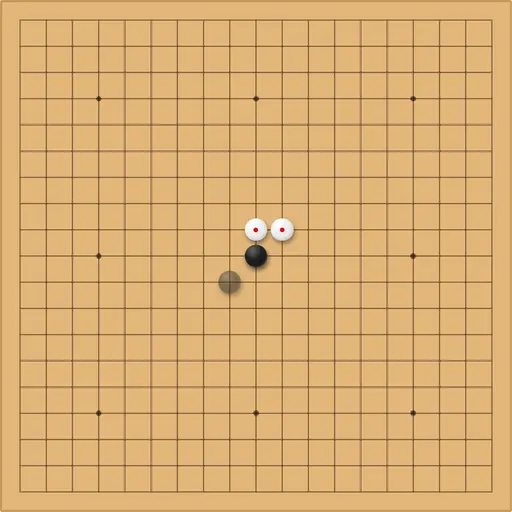
About Connect6
Connect6 is what happens when a computer scientist fixes gomoku: Black plays a single opening stone, then both sides place two stones every turn, racing to line up six. Invented by Professor I-Chen Wu in 2003, the two-stone rule erases the first-move advantage that haunts five-in-a-row — each turn you gain one net stone over your opponent, whoever you are.
Here you get Connect6 on the full 19×19 board where the game breathes: double placements mean threats multiply fast, and defense must answer two stones at once. Train against four AI levels, share a device for a local duel, or open an online room and send a friend the link. Placements confirm as a pair, so you can stage both stones before committing.
Connect6 at a glance
- Origin
- Introduced by Professor I-Chen Wu (Taiwan), 2003
- Board
- 19×19 intersections
- Players
- 2
- Modes here
- vs AI (4 levels), same-screen 2P, online friend rooms
- Learn more
- Wikipedia
How to play Connect6
Black opens with one stone; after that, each player places exactly two stones per turn on any empty intersections.
- Stage your two stones anywhere on the board — they do not need to touch each other — then confirm the pair to end your turn.
- Make a line of six or more of your color in any direction — horizontal, vertical, or diagonal — to win immediately.
- Stones never move or get captured; the position only grows, so every placement is permanent.
- Because opponents answer with two stones, a single open four is not enough — winning attacks stack multiple threats at once.
- If the board fills without a six-in-a-row, the game is a draw.
Connect6 strategy tips
- Think in pairs: the strongest turns combine one attacking stone and one defensive stone, or two threats far apart.
- A lone open three is weak here — your opponent has two stones to answer with. Build overlapping threats instead.
- Watch for double-line intersections where one stone extends two of your lines at once; those points win games.
- Defend with splits: when facing two separate threats, one stone on each often beats two stones on one.
- Use the whole 19×19 board — attacks that start too cramped run out of room to develop double threats.
Connect6 FAQ
- Why two stones per turn?
- Fairness. In gomoku, moving first is a mathematically proven advantage. Connect6's opening — one stone for Black, then two per turn for everyone — means each player always ends their turn one net stone ahead of where the opponent left them, neutralizing the first-move edge.
- Do my two stones have to be next to each other?
- No. Place them on any two empty intersections — together in one attack, or split between offense and defense on opposite sides of the board. Splitting is often the stronger play.
- Is Connect6 harder than gomoku?
- The rules are just as simple, but reading is wilder: every turn changes the board by two stones, so threats compound quickly. Gomoku players usually adapt within a few games and find it hard to go back.
- Can I play Connect6 online with a friend?
- Yes. Open a room from this page and share the invite link — you both place stones on the same live 19×19 board from any browser, no account needed.
- What should a beginner watch out for?
- Under-defending. A turn that ignores your opponent's growing lines loses fast, because next turn they add two more stones. When in doubt, spend one of your two stones on defense.
Games like Connect6
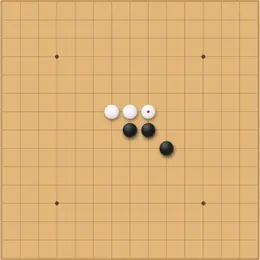
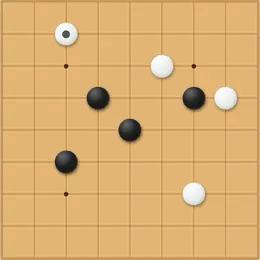
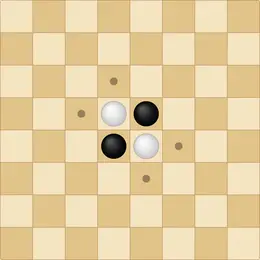
Two stones per turn, six in a row to win — play the fair version of five-in-a-row, free.