
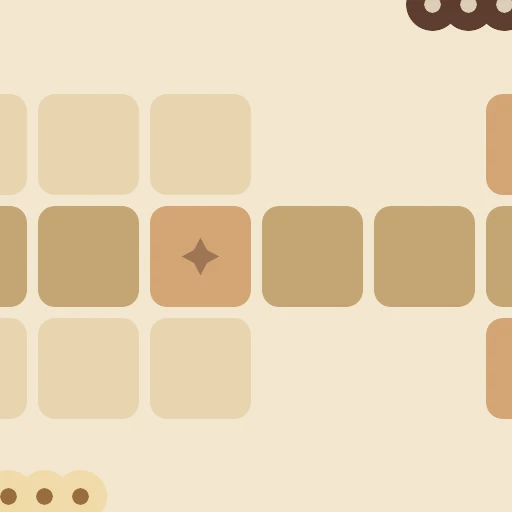
About Royal Game of Ur
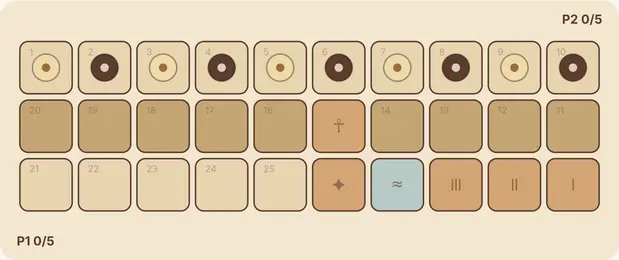
The Royal Game of Ur is an ancient Mesopotamian race played on a striking twenty-square board. Seven pieces leave a private track, meet the opponent in one narrow shared lane, then peel away toward home. The rosettes are more than decoration: land on one and you roll again; hold the middle rosette and your piece cannot be captured.
The original boards survived, but a complete ancient rulebook did not. This playable version follows Irving Finkel's well-known British Museum reconstruction of a Babylonian tablet, while acknowledging that people in antiquity may have played differently. Roll the four binary dice, weigh a safe advance against a hit, and try to bear off all seven pieces first. Play an AI, pass the device, or invite a friend into a live room.
Royal Game of Ur at a glance
- Origin
- Mesopotamia (Royal Cemetery of Ur, ~2600–2400 BCE); playable rules reconstructed by Irving Finkel / British Museum from a Babylonian tablet
- Board
- Distinctive 20-square layout; 7 pieces per player; 4 binary dice (0–4)
- Players
- 2
- Modes here
- vs AI (4 levels), same-screen 2P, online friend rooms
- Learn more
- Wikipedia
How to play Royal Game of Ur
Bring all seven pieces home before your opponent. The small dice range makes timing, rather than raw speed, the heart of the game.
- Roll four binary dice. Each shows a marked or blank face, producing a total from 0 to 4; a zero ends your turn.
- Use the full total for one piece: either bring a new piece onto its private track or move a piece already in play.
- The two routes overlap only in the middle. Land on an opposing piece there to send it back to the start.
- Rosettes give another roll. The central rosette also protects its occupant, so it is the key square on the board.
- A piece can leave only on an exact roll. Bear off all seven before your opponent to win.
Royal Game of Ur strategy tips
- Do not mistake the private lanes for safety alone: they are where you decide which pieces are ready to enter the fight.
- The middle rosette is worth a detour when the lane is crowded. It combines shelter with another chance to act.
- Avoid feeding the shared lane with every piece at once. Two useful runners usually give you more choices than a traffic jam.
- Before leaving a piece exposed, count the opponent's possible totals from 1 to 4 and check which of their pieces can reach it.
- Approach the exit with more than one piece. Exact bearing off becomes kinder when several totals can still help.
Royal Game of Ur FAQ
- Which version of the Royal Game of Ur is played here?
- This board uses the Irving Finkel / British Museum reconstruction based on a Babylonian rules tablet. It is a modern reconstruction, not a claim that every ancient player used identical rules, but it gives both sides one consistent and widely taught game.
- Why do the dice only produce numbers from zero to four?
- The four dice are binary: each contributes either zero or one. That compressed range creates the tension of Ur. A roll of zero loses the turn, while every non-zero result forces a precise decision about entering, advancing, capturing, or bearing off.
- Why is the middle rosette so important?
- Every rosette gives an extra roll, but the central one does more: a piece resting there cannot be captured. It interrupts the shared lane at its most dangerous point and can turn a defensive stop into an attacking turn.
- Can I play the Royal Game of Ur with another person here?
- Yes. You can pass one device between two players, or open a live room and send its invite link to a friend. There is also a four-level AI when you want to practice the timing of the shared lane on your own.
- Must the roll be exact to bear a piece off?
- Yes. You cannot overshoot the exit. That is why a group of pieces near home is often stronger than one lone leader: more rolls remain useful on the final stretch.
Games like Royal Game of Ur
Take the middle rosette, make the most of a small roll, and send seven pieces home.