
About Senet
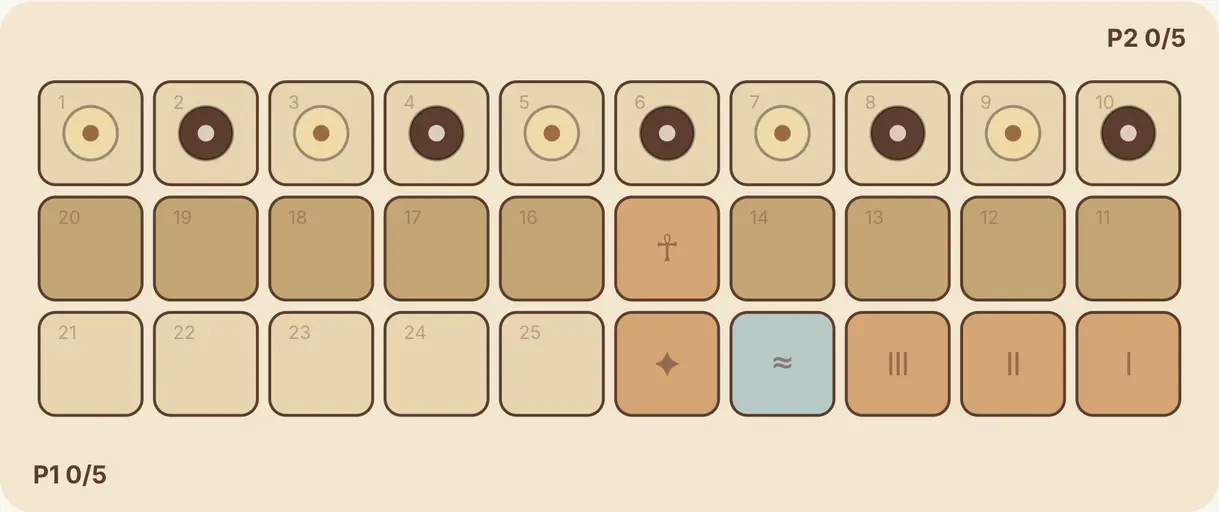
Senet is a short race in which five pieces a side already sit mixed on the first row of a 3×10 board. The path folds back on itself, four throwing sticks replace a cubic die, and the fight is about walls, not raw speed. Two enemy pieces standing together stop you from landing or passing. A lone enemy piece can be swapped. House 26 is a gate you must hit exactly before the last stretch, and the water house can send a piece back to rebirth.
The surviving evidence does not settle every senet rule, so this page uses one complete reconstructed set and enforces it on the board: you cannot skip 26, water with nowhere to return is refused, and an extra turn only comes after a real move on 1, 4, or 5. Face a four-level AI, pass one device, or send a room link. No account.
Senet at a glance
- Origin
- Ancient Egypt; boards survive from the Old Kingdom onward. Playable rules here are a reconstructed Kendall-family set, not a recovered ancient rulebook
- Board
- 3×10, squares 1–30 folding left-to-right then back; 5 pieces each; 4 sticks (1–4, or 5 if all blank)
- Players
- 2
- Modes here
- vs AI (4 levels), same-screen 2P, online friend rooms
- Learn more
- Wikipedia
How to play Senet
Get all five of your pieces off the board first. The sticks always produce 1 through 5; four blanks are a five, not a skipped turn.
- Light starts on 1, 3, 5, 7, 9 and dark on 2, 4, 6, 8, 10. The first row is already a contact fight.
- Throw four sticks. Marked faces add to 1–4; all blank faces count as 5. Spend the whole number on one piece along the folding path.
- Two or more consecutive enemy pieces are a wall. A single enemy piece swaps with you, except on the safe houses 15 and 26.
- A throw of 1, 4, or 5 that actually moves grants another turn. If nothing can move, the turn passes even on a lucky throw.
- You must land on 26 before going past it. House 27 (water) returns that piece to 15 if 15 is free. From 26–30 you need an exact remaining count to advance or to leave.
Senet strategy tips
- The opening 1 is often a swap, not a quiet advance. Decide early whether you want a pair that can become a wall on the middle row.
- A wall on the turn of the path is worth more than a lonely leader on a high number. If you are behind, break their pair even when the swap looks small.
- Arrive at 26 with more than one piece nearby. Sitting one short with a 5 in hand is a common way to stall yourself.
- Look at house 15 before you step on water. If your own piece or a protected enemy is there, that dive is illegal and you may have to pass.
- A 1 is often better spent sitting on 26 or finishing a swap than racing the furthest piece. Extra turns come from the throw, not from empty distance.
Senet FAQ
- Which senet rules does this board use?
- One reconstructed set in the Kendall family: five pieces, sticks that score 1–5, extra turns on 1, 4, and 5, walls of two, swaps on a singleton, a mandatory stop on 26, and water returning to 15. Other reconstructions exist. This site keeps one complete set so the board, the AI, and both players use the same rules.
- How do the throwing sticks work?
- Each stick is marked or blank. The marked count is 1–4; four blanks score 5. There is no zero that skips the throw. You only pass when that number has no legal landing, for example when a wall bars the way or 26 cannot be hit exactly.
- Can two pieces really block the whole path?
- Yes. Consecutive enemy pieces form a wall you cannot land on or pass through. A single piece is not a wall: landing on it swaps places, unless it sits on 15 or 26, which are safe.
- What does the water square do?
- House 27 sends that piece to house 15, provided 15 is empty of your own piece and of a protected enemy. If 15 is occupied that way, stepping on water is illegal. The board will not let you take a dive you cannot complete.
- Can I play senet with a friend here?
- Yes. Pass one device, or open a room and send the invite link. The same live board also has four AI levels when you want to practice walls and the approach to 26 alone.
Games like Senet
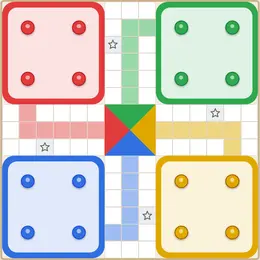
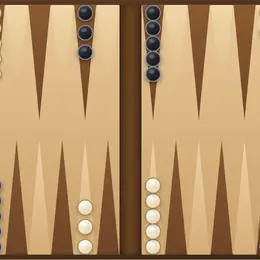
Throw the sticks on a board that already starts in contact, and see whether a wall or a clean stop on 26 decides it.