
How to Think in Four in a Row
Most games are not won by suddenly noticing a line of four. They are won a move or two earlier, when one player makes a threat that the other player cannot answer without giving something else away.
Ask one question first: “If I ignore them, where can they win on their next turn?”
Use the middle because it gives you choices
A disc in the centre can belong to horizontal, vertical, and both diagonal lines. That does not make the centre an automatic win; it makes your later moves less predictable. Take it when you can, then build outward with a purpose.
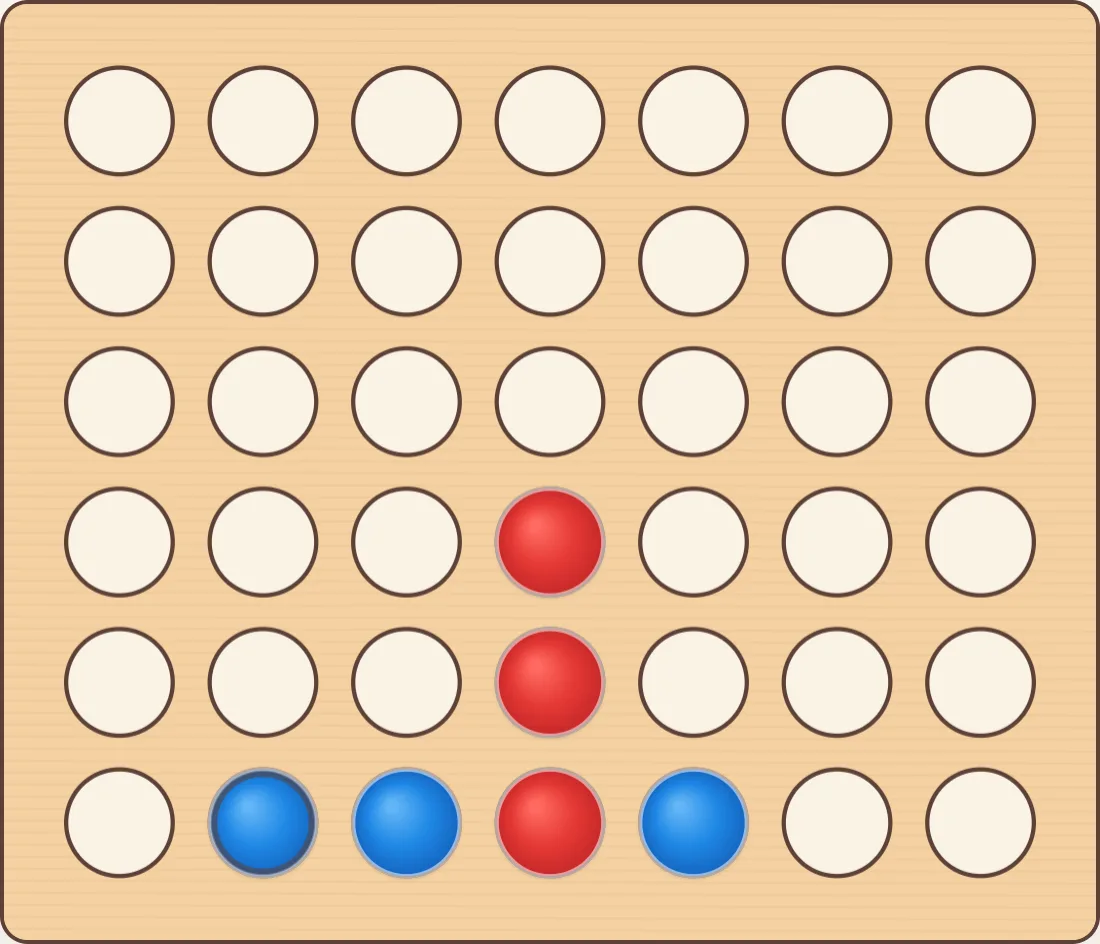
Three in a row is only useful if the fourth square is playable
A tempting row can be a mirage when its missing square is floating above empty space. Look below the target square. If the column is not supported, your opponent has time to do something more urgent.
Win by giving them two problems
The cleanest finish is a fork: one move creates two separate winning squares. Your opponent may block one, but cannot occupy both. While planning an attack, do not ask only “Can I make three?” Ask “What will be open after they block me?”
Block the threat that ends the game, not the one that looks scary
Beginners often chase their own horizontal row while the opponent has a vertical win one drop away. If they have an immediate winning square, blocking is not passive play—it is the only move that keeps the game alive.
Three mistakes that hand over games
- Dropping under an opponent’s diagonal and giving them the support they needed.
- Starting a new attack while an existing one-move loss is still on the board.
- Seeing your own three discs but not checking whether the fourth cell can be reached.
Four in a Row strategy questions
- Is the centre column always the best first move?
- It is usually the most flexible opening because it supports many line directions. It is not a guarantee: you still need to notice the opponent’s replies.
- How do you make a double threat in Four in a Row?
- Set up a move that leaves two different winning cells available on your next turn. The important detail is that both cells must already be playable under gravity.
- Should I attack or block?
- Block whenever your opponent can win on their next drop. If they cannot, look for a move that improves your own threat without making theirs easier to complete.
- What is the fastest way to improve?
- After each loss, replay the final few moves and find the first turn where a threat was ignored. That habit teaches more than memorising a list of openings.
Try one idea at a time
Start against the computer and spend a game watching only supported threats. In the next game, look for a fork. You do not need to see the whole board at once.